
Practical Ways to Keep Body and Mind Active After Retirement
Discover practical and realistic ways to stay physically active, mentally engaged, emotionally balanced, and purposeful after retirement.
HEALTH & AWARNESS
Tapas Kumar Basu
5/16/20269 min read
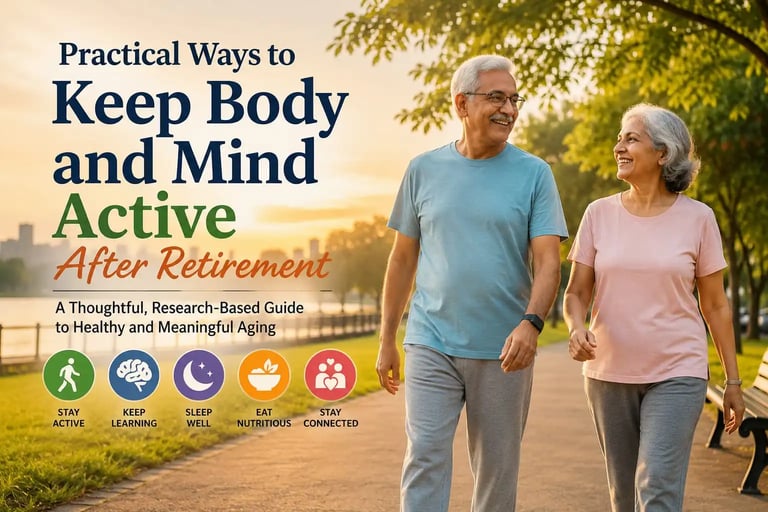
Retirement Is Not the End of Activity; It Is a Change of Rhythm
For many people, retirement is imagined as a long-awaited period of rest after decades of responsibility, routine, and work. Yet once the structure of working life slowly fades, another reality often appears quietly in the background: the days become less organized, movement decreases, conversations become fewer, and the mind no longer receives the same kind of daily stimulation.
Some people enjoy this change immediately. Others experience a strange emptiness they did not expect.
That feeling is more common than many realize.
Modern research on healthy aging offers an encouraging perspective: growing older does not automatically mean losing vitality, mental sharpness, or emotional balance. The human body and brain continue adapting throughout life when supported by meaningful routines, social connection, physical movement, and continued engagement with life.
Retirement therefore does not have to become a slow withdrawal from activity or purpose. In many ways, it can become an opportunity to live at a healthier, calmer, and more intentional pace than before.
The goal is not to remain endlessly busy. Constant busyness can become exhausting at any age. The real goal is to remain physically capable, mentally awake, emotionally steady, and connected to life in meaningful ways.
The ideas discussed here are not about perfection or unrealistic self-improvement. They are simple, practical habits that can help daily life feel healthier, calmer, and more balanced over time.
Keep the Body Moving Even in Simple Ways
One of the strongest predictors of healthy aging is regular physical movement. According to the World Health Organization, older adults benefit significantly from at least 150 minutes of moderate physical activity each week.
Fortunately, meaningful movement does not require intense exercise routines or athletic ability. In everyday life, consistency matters far more than intensity.
Simple habits can make a noticeable difference:
Walk for 20–30 minutes most days
Stretch gently to maintain flexibility
Use stairs when safe and comfortable
Practice light strength exercises two or three times weekly
Spend less time sitting continuously
As people age, muscle mass naturally declines through a process known as sarcopenia. Over time, this can affect balance, mobility, confidence, and independence. Regular movement helps slow this decline while improving circulation, sleep quality, emotional wellbeing, and overall resilience.
Most importantly, movement helps preserve independence in ordinary daily life. The ability to walk comfortably, carry groceries, climb stairs, or move without fear often depends less on age itself and more on long-term daily habits.
In the long run, gentle consistency usually helps far more than exhausting yourself for a few days and then stopping altogether.
Keep the Mind Engaged Through Curiosity and Learning
Retirement changes mental routines as much as physical ones. Many people underestimate how strongly work, schedules, conversations, responsibilities, and problem-solving activities help stimulate the brain throughout adult life.
Fortunately, neuroscience shows that the brain retains the ability to adapt throughout life — a phenomenon known as neuroplasticity.
Mental engagement does not require solving difficult equations or mastering highly technical subjects. The brain benefits simply from continued curiosity, reflection, creativity, and meaningful stimulation.
Practical ways to stay mentally active include:
Reading books, essays, or thoughtful articles
Learning new technology or practical skills
Writing journals, reflections, or personal memories
Having meaningful conversations
Exploring hobbies that require attention and creativity
Teaching younger generations through lived experience
Sometimes even learning one small new thing can make the mind feel more awake, curious, and alive again.
Many retirees also discover something unexpected during this phase of life: learning becomes enjoyable again once it is no longer tied to pressure, deadlines, or competition.
Protect Sleep as a Foundation of Health
Sleep patterns often change with age. Many retirees experience lighter sleep, earlier waking, or interrupted sleep during the night. While some change is natural, long-term poor sleep can affect memory, mood, concentration, immunity, and physical recovery.
Healthy aging is deeply connected to restorative rest.
Research increasingly links chronic sleep disturbance with higher risks of anxiety, depression, cardiovascular problems, metabolic disorders, and cognitive decline. Yet sleep is often overlooked while people focus mainly on diet or exercise.
Simple habits can improve sleep quality naturally:
Maintain regular sleep and wake times
Reduce caffeine later in the day
Limit screen exposure before bedtime
Keep evening meals lighter
Create a calm nighttime routine
Avoid overstimulating news or stressful discussions before sleep
Sleep often improves naturally when the mind and body begin settling into a calmer and more stable daily rhythm.
Eat to Support Strength, Energy, and Stability
Nutrition becomes increasingly important with age because the body gradually becomes less efficient at preserving muscle strength, recovery, and metabolic balance.
Healthy eating after retirement should not revolve around complicated diet trends or harsh restrictions. Sustainable nourishment matters far more than perfection.
Research on Mediterranean-style dietary patterns consistently shows benefits for heart health, emotional wellbeing, cognitive function, and long-term quality of life.
Balanced nutrition principles include:
Eating adequate protein from sources such as lentils, eggs, fish, dairy, or legumes
Including colorful vegetables and fruits regularly
Reducing highly processed foods and excess sugar
Staying hydrated throughout the day
Maintaining regular meal timing when possible
Protein deserves special attention because preserving muscle strength becomes increasingly important in later life. Combined with regular movement, proper nutrition supports balance, mobility, stability, and everyday energy.
At this stage of life, eating well is less about appearance and more about having the strength and energy to live comfortably and independently each day.
Human Connection Remains Essential
One of the clearest findings in long-term aging research is that meaningful human relationships strongly influence emotional wellbeing, resilience, and even longevity.
The Harvard Study of Adult Development — one of the longest-running studies on adult life — repeatedly found that supportive relationships play a major role in long-term happiness and health.
Retirement can sometimes reduce social interaction without people fully noticing it at first. Workplace conversations disappear, routines change, and social circles may gradually become smaller.
As a result, maintaining connection becomes intentional rather than automatic.
Helpful ways to stay socially engaged include:
Staying in regular contact with family and friends
Participating in community or interest-based groups
Sharing knowledge and guidance with younger people
Spending time in thoughtful conversation
Reaching out even when motivation feels low
Importantly, emotional connection matters more than social quantity. A few genuine relationships often provide more comfort than large but emotionally distant social circles.
No matter how independent people become, most still need warmth, conversation, understanding, and emotional connection throughout life.
A Sense of Purpose Protects Emotional Health
One of the biggest emotional transitions after retirement is the loss of structured responsibility. For decades, many people define themselves through profession, productivity, schedules, or obligations.
When that structure suddenly changes, some individuals begin to feel emotionally directionless — even when they are financially secure.
Research suggests that people who continue feeling useful and purposeful often experience greater emotional resilience, better mental health, and higher life satisfaction.
Purpose after retirement can take many forms:
Mentoring younger individuals
Writing personal reflections or experiences
Volunteering within the community
Pursuing creative projects
Continuing lifelong learning
Caring for family relationships
Sharing wisdom gained through experience
Purpose does not need to be grand, public, or highly ambitious.
Very often, meaning enters life quietly through simple responsibilities, helping others, remaining dependable, or continuing to contribute in small everyday ways.
Manage Stress Through Simple Daily Practices
Retirement does not automatically remove stress from life. Health concerns, financial pressure, loneliness, uncertainty, or changing family roles can still create emotional strain.
Chronic stress affects both physical and mental wellbeing by increasing inflammation, disrupting sleep, and gradually exhausting emotional balance.
Simple daily habits can help restore calm and clarity:
Slow, deep breathing for a few minutes daily
Quiet walking without constant phone distraction
Meditation, reflection, or prayer
Writing short gratitude notes
Spending time in nature
Reducing unnecessary mental overstimulation
These habits may appear small, but their effect often becomes noticeable over time when practiced consistently.
Emotional balance rarely comes from dramatic life changes. More often, it grows slowly through ordinary routines that create steadiness and inner calm.
Small Habits Create Long-Term Change
One common mistake after retirement is trying to redesign life overnight. Sudden extreme routines often become difficult to maintain and eventually create frustration.
Behavioral science consistently shows that long-term change usually develops through small, repeatable actions.
Examples of simple micro-habits include:
Walking at the same time each morning
Drinking water after waking up
Reading for fifteen minutes daily
Writing one short reflection before sleep
Stretching during television breaks
Small habits feel easier to continue because they do not overwhelm the mind or body.
Over time, these routines gradually create structure, stability, confidence, and momentum.
Long-term wellbeing is rarely built through intensity alone. It is usually built quietly through consistency.
Respect Personal Limits Without Comparison
Every person enters retirement with a different health history, financial reality, emotional experience, and level of physical ability.
Constant comparison with others often creates unnecessary frustration.
Some people remain highly energetic in later life. Others live with chronic conditions, mobility limitations, or emotional struggles. Both realities deserve understanding rather than judgment.
Healthy aging is not a competition.
Important reminders include:
Progress gradually
Avoid pushing through pain
Consult healthcare professionals when necessary
Focus on personal consistency rather than comparison
Appreciate improvement, even when it feels slow
Health after retirement is rarely about quick results. Patience, self-respect, and steady habits often matter far more.
Use Time More Intentionally
One of retirement’s greatest advantages is the freedom to choose how time is used.
For decades, many people live according to external schedules, responsibilities, and deadlines. Retirement creates an opportunity to rebuild daily life more intentionally — with greater attention to health, relationships, reflection, and inner balance.
That does not mean every moment must be productive.
Sometimes the healthiest rhythm includes slowing down, observing more carefully, thinking more deeply, and living with less unnecessary urgency.
Move regularly.
Stay curious.
Remain connected.
Protect inner balance.
In everyday life, it is usually the small things done regularly that make the biggest difference over the years.
Key Takeaways
Regular movement supports mobility, strength, balance, and independence.
Mental engagement helps preserve cognitive flexibility and emotional resilience.
Sleep, nutrition, and stress management work together to support healthy aging.
Social connection and purpose remain deeply important throughout life.
Small, sustainable habits usually create the most lasting results.
A Practical Closing Perspective
Staying active after retirement does not mean remaining constantly busy or trying to recreate youth. Healthy aging is less about chasing perfection and more about maintaining steadiness — physically, mentally, and emotionally.
Research can offer valuable guidance, but real wellbeing is often built quietly through ordinary routines practiced day after day.
A short morning walk.
A thoughtful conversation.
A good night’s sleep.
A calm routine.
A continued sense of curiosity.
None of these habits are extraordinary on their own. Yet together, they can gradually make daily life feel healthier, steadier, and more meaningful.
Retirement does not have to become a period of decline. For many people, it slowly becomes a quieter phase of life — one with more reflection, greater balance, deeper appreciation, and a renewed sense of what truly matters.
Frequently Asked Questions (FAQ)
1. Is it possible to improve health after retirement?
Yes. Research shows that regular movement, balanced nutrition, mental engagement, and healthy routines can improve wellbeing at almost any age.
2. How much exercise is recommended for retirees?
Most health organizations recommend around 150 minutes of moderate physical activity weekly, which roughly equals 20–30 minutes daily.
3. Is walking enough to stay healthy?
Walking is highly beneficial. Adding light strength and flexibility exercises further supports balance, mobility, and muscle preservation.
4. Why do some people feel emotionally low after retirement?
Changes in routine, reduced social interaction, and loss of work identity can contribute to emotional difficulty. Staying socially connected and maintaining a sense of purpose often helps significantly.
5. Can the brain still learn in later life?
Yes. The brain continues adapting throughout life through neuroplasticity, especially when people remain mentally active and curious.
6. What is the best way to begin if everything feels overwhelming?
Start with one small habit — such as a short daily walk or a regular sleep routine — and build gradually from there.
7. Is retirement linked to loneliness?
It can be for some individuals, especially after major routine changes or reduced social interaction. Maintaining meaningful relationships and regular communication can strongly support emotional wellbeing.
8. How important is routine after retirement?
A healthy routine provides structure, stability, and emotional balance. Simple daily rhythms often help people feel calmer, healthier, and more organized.
9. Can stress still affect health after retirement?
Yes. Even after leaving professional responsibilities, health concerns, emotional adjustment, or financial pressure can still create stress. Managing stress remains important for long-term wellbeing.
10. What is one of the most overlooked aspects of healthy aging?
Many experts believe that purpose and emotional connection are often overlooked. Physical health matters greatly, but meaningful relationships and continued engagement with life are equally important.
Scientific References (Selected)
World Health Organization (WHO). Guidelines on Physical Activity and Sedentary Behaviour. 2020.
National Institute on Aging (NIA). Exercise and Physical Activity for Older Adults.
Harvard Study of Adult Development. Harvard Medical School.
Erickson KI et al. (2011). Exercise training increases hippocampal size and improves memory. PNAS.
Jacka FN et al. (2017). Dietary improvement and depression (SMILES trial). BMC Medicine.
Gómez-Pinilla F. (2008). Brain foods and brain function. Nature Reviews Neuroscience.
Holt-Lunstad J et al. (2010). Social relationships and mortality risk. PLoS Medicine.
Kabat-Zinn J. (2003). Mindfulness-based interventions. Clinical Psychology: Science and Practice.
Livingston G et al. (2020). Dementia prevention, intervention, and care. The Lancet.
Rowe JW, Kahn RL. (1997). Successful aging. The Gerontologist.
Disclaimer: This article is intended for educational purposes only and does not replace professional medical advice. For personal health concerns, consult a qualified healthcare professional.
Explore fitness, meditation, and healthy living tips.
© 2026. All rights reserved.