
Which Types of Utensils Are Best for Cooking and Eating?
Learn which cooking and eating utensils are safest and healthiest for everyday use, including stainless steel, iron, clay, glass, copper, and non-stick cookware.
HEALTH & AWARNESS
Tapas Kumar Basu
5/17/20268 min read
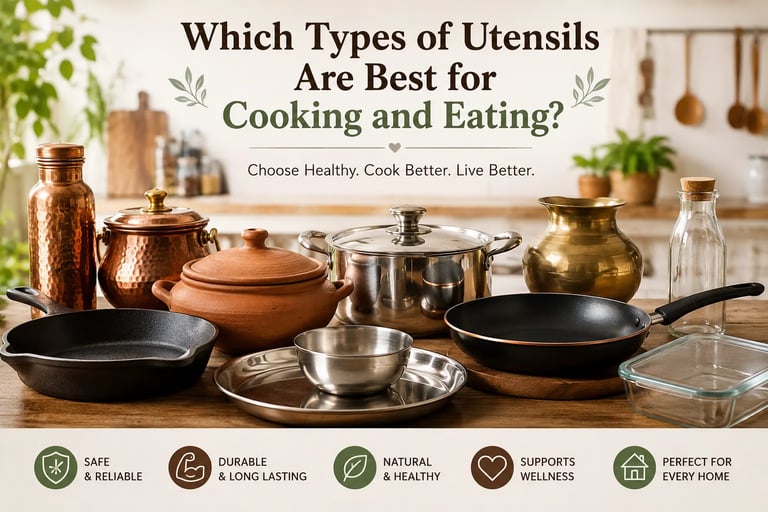
The Utensils We Use Every Day Matter More Than We Realize
Most people think carefully about the food they eat. We discuss vegetables, oils, sugar, protein, organic ingredients, and healthy recipes. Yet one important part of daily eating is often overlooked: the utensils and cookware we use every single day.
The pan used for frying, the pot used for boiling rice, the bottle used for storing water, or even the plate from which we eat quietly become part of our daily health habits over time.
For generations, families cooked in iron pans, clay pots, brass utensils, and stainless steel cookware without giving it much thought. Meals were often prepared slowly, shared together, and connected with a rhythm of life that felt calmer and less rushed than today.
Many older people still remember kitchens where only a few simple utensils were used, yet the food somehow felt deeply satisfying.
Modern kitchens, however, have changed significantly. Today we are surrounded by non-stick coatings, plastic containers, aluminum products, synthetic storage materials, and heavily processed kitchenware designed mainly for convenience and speed.
Some of these products are perfectly safe when used correctly. Others require more care than many people realize.
The goal of this article is not to create fear around modern cookware. Fear rarely helps people make better decisions. The real goal is to understand which materials are generally safer, more stable, practical, and better suited for long-term everyday use.
A healthy kitchen is usually not built through expensive trends or internet panic. More often, it is built quietly through simple, informed daily choices.
Stainless Steel: One of the Most Reliable Everyday Choices
For many households, stainless steel remains one of the safest and most practical materials for everyday cooking and eating.
Good-quality stainless steel cookware is durable, relatively non-reactive, easy to clean, and suitable for most types of food preparation.
Why many people continue to prefer stainless steel:
Long-lasting and durable
Resistant to rust and corrosion
Suitable for regular daily cooking
Easy to maintain and clean
Generally stable with most foods
Stainless steel works especially well for boiling, steaming, sautéing, and storing cooked food temporarily.
Of course, quality matters. Very low-grade products may wear out more quickly or behave differently over time. Choosing trusted food-grade steel is usually a better long-term decision than repeatedly replacing cheap cookware.
One reason stainless steel remains popular across generations is simple: it is dependable. People often continue using the same utensils for years without constantly worrying about them.
That kind of quiet reliability still matters in everyday life.
Iron Cookware: Traditional, Strong, and Naturally Useful
Iron cookware has been part of traditional kitchens for centuries, and many families still trust it deeply.
Cooking in iron utensils can slightly increase the iron content of food, which may help individuals who are prone to low iron levels or mild iron deficiency.
Iron cookware is especially useful for:
Frying
Roasting
High-heat cooking
Traditional recipes
Many people also feel that food cooked in iron develops a richer texture and deeper flavor.
Some still remember the taste of rotis, vegetables, or fried dishes prepared slowly in old iron pans at home. In many families, the cookware itself quietly became part of household memory.
At the same time, iron utensils require care. If not dried properly, they may rust. Acidic foods such as tomatoes or vinegar-based dishes can also react more strongly with iron surfaces.
Still, when maintained properly, iron cookware can remain useful for decades. In some homes, these utensils are even passed down from one generation to the next.
There is something reassuring about cookware that becomes more seasoned and dependable with time rather than disposable after a few years.
Clay Pots: Slow Cooking with Warmth and Simplicity
Clay cookware carries a certain warmth and simplicity that many people still find comforting.
Traditional clay pots are often associated with slow cooking methods that distribute heat gently and help preserve moisture naturally. Many people feel that food cooked in clay develops a softer, earthier, and more natural taste.
Clay cooking is commonly appreciated for:
Slow cooking
Traditional recipes
Gentle heat retention
Reduced need for excessive oil
For some people, the smell of food cooking in clay pots brings back memories of older kitchens, quieter evenings, and meals prepared with patience rather than hurry.
However, not all clay cookware available today is equal in quality. Poorly manufactured products may contain unsafe chemical glazes or impurities.
When choosing clay utensils:
Buy from trusted sources
Prefer food-safe, lead-free products
Avoid cracked or chemically coated surfaces
Clay cookware also requires patience and careful handling. It is not designed for rushed cooking or sudden temperature changes.
In many ways, clay cooking reflects an older approach to food itself slower, calmer, and more mindful.
Glass Utensils: Clean, Stable, and Non-Reactive
Glass is often considered one of the safest materials for storing and serving food because it is generally non-reactive.
Unlike certain metals or plastics, glass usually does not absorb odors, stains, or chemicals easily.
Benefits of glass utensils and containers include:
Non-reactive with acidic foods
Easy to clean
Does not retain food odors
Useful for food storage
Transparent and hygienic
Glass is especially useful for storing leftovers, spices, water, and cooked food.
Many people also appreciate the simple feeling of cleanliness that glass provides. Being able to see the food clearly often creates a quiet sense of freshness and trust.
The main disadvantage, of course, is fragility. Glass can break if handled carelessly or exposed to sudden temperature changes.
Still, for storage and serving purposes, high-quality glass remains one of the cleanest and most dependable materials available.
Copper and Brass Utensils: Beautiful Traditions That Require Care
Copper and brass utensils have long been associated with traditional kitchens in many cultures. Beyond their practical use, they often carry emotional and cultural value inside families.
Copper, in particular, conducts heat extremely well, making it useful for certain cooking techniques.
However, these metals require proper maintenance and safe usage.
Unlined copper may react with acidic foods, and poorly maintained brass utensils can also create problems over time.
Traditionally, many copper and brass utensils were lined with tin for safer cooking.
Today, these utensils are often better suited for:
Serving food
Storing water temporarily
Decorative or occasional use
Even now, many people continue using copper water vessels not only because of tradition, but because certain habits passed through generations create a feeling of continuity and familiarity.
When maintained properly and used carefully, these utensils can still remain meaningful parts of a healthy kitchen.
Non-Stick Cookware: Convenient but Best Used Carefully
Non-stick cookware became popular largely because of convenience. It requires less oil, is easier to clean, and simplifies cooking for busy households.
When used correctly, modern non-stick cookware is generally considered safe by many regulatory authorities. Problems usually arise when the coating becomes damaged, scratched, or repeatedly overheated.
Important precautions include:
Avoid overheating empty pans
Do not use metal utensils that scratch the surface
Replace heavily damaged cookware
Use moderate cooking temperatures when possible
Non-stick cookware may still be practical for certain foods such as eggs, pancakes, or low-oil cooking.
However, heavily scratched or peeling cookware is usually best replaced rather than used continuously for years.
Convenience is useful, but long-term kitchen habits should still include a certain amount of care and awareness.
Plastic Containers: Useful but Better Used Thoughtfully
Plastic has become deeply integrated into modern kitchens because it is lightweight, inexpensive, and convenient.
However, not all plastics behave the same way under heat.
Some plastic containers may release unwanted chemicals when exposed to very high temperatures, especially during microwave heating or after repeated long-term wear.
Safer habits include:
Avoid pouring extremely hot food into low-quality plastic containers
Prefer glass or steel for long-term storage
Avoid microwaving old or damaged plastic containers
Use BPA-free products whenever possible
Plastic itself is not always harmful. The bigger issue is often careless overuse without attention to heat, quality, or wear.
A thoughtful kitchen does not necessarily reject modern convenience. It simply uses convenience with balance and awareness.
The Healthiest Kitchen Is Usually a Balanced One
Many people become confused while searching for the “perfect” cookware material. In reality, no single utensil is ideal for every purpose.
A balanced kitchen often works best.
For example:
Stainless steel for regular daily cooking
Iron cookware for certain traditional or high-heat dishes
Glass for storage
Clay pots for slow cooking
Limited and careful use of non-stick cookware
Health is rarely determined by one single utensil alone. Overall cooking habits, food quality, hygiene, and lifestyle matter far more.
Still, the materials we use daily should support health rather than quietly work against it over time.
Avoid Fear-Based Thinking Around Cookware
Modern discussions about cookware sometimes become unnecessarily extreme. One article claims aluminum is dangerous. Another says non-stick cookware is toxic. Someone else promotes expensive “miracle cookware” as the only healthy solution.
This often creates confusion and anxiety instead of practical understanding.
In reality, most cookware becomes problematic mainly when:
Low-quality materials are used
Damaged utensils continue being heavily used
Excessive heat is applied improperly
Basic maintenance is ignored
A calm and informed approach is usually more useful than fear.
Healthy kitchens are built through reasonable habits, not constant worry.
Small Kitchen Habits Often Matter More Than Expensive Products
People sometimes spend large amounts of money searching for “perfect cookware” while ignoring more important habits:
Eating balanced meals
Reducing highly processed foods
Maintaining kitchen hygiene
Avoiding repeated reheating of oil
Cooking fresh food regularly
Cleaning utensils properly
A simple kitchen with clean, well-maintained utensils is often healthier than an expensive kitchen filled with neglected cookware.
Good health rarely comes from one magical product.
More often, it grows quietly through ordinary habits repeated every day over many years.
Sometimes the healthiest kitchens are not the most modern ones. They are simply the ones where food is prepared carefully, shared peacefully, and cooked with attention rather than haste.
Key Takeaways
Stainless steel remains one of the safest and most practical everyday choices.
Iron cookware can support natural iron intake and long-term durability.
Clay pots provide gentle cooking but require careful selection.
Glass is excellent for storage and serving food.
Non-stick cookware is convenient but should be used carefully.
Excessive heat and damaged cookware are usually bigger concerns than the material itself.
Simple kitchen habits often matter more than expensive cookware trends.
A Practical Closing Perspective
The utensils we use every day slowly become part of our routines, memories, and family life. They may seem ordinary, but over years of cooking and sharing meals, they quietly shape daily habits in ways we rarely notice.
Choosing healthier cookware does not require fear or obsession. It simply requires a little awareness, balance, and practical understanding.
In most homes, the healthiest kitchen is usually not the most expensive one. It is the one built with cleanliness, moderation, thoughtful habits, and care for everyday wellbeing.
Sometimes good health begins not with dramatic change, but with ordinary decisions made a little more consciously over time.
Frequently Asked Questions (FAQ)
1. Which cookware is considered safest for everyday cooking?
High-quality stainless steel is widely considered one of the safest and most practical choices for everyday cooking because it is durable, relatively non-reactive, and easy to maintain.
2. Is cooking in iron utensils healthy?
Yes. Cooking in iron cookware may slightly increase the iron content of food, which can be beneficial for some people, especially those prone to low iron levels.
3. Are non-stick pans dangerous?
Modern non-stick cookware is generally considered safe when used properly. Problems mainly arise when pans become heavily scratched, damaged, or overheated repeatedly.
4. Is aluminum cookware harmful?
Occasional use is generally considered safe by many health authorities. However, some people prefer limiting regular use of low-quality aluminum cookware, especially for acidic foods.
5. Are clay pots good for health?
Traditional clay pots support slow and even cooking and may help preserve moisture naturally. It is important to choose food-safe, lead-free products from trusted sources.
6. Is it safe to store food in plastic containers?
It depends on the quality and usage. Avoid exposing low-quality plastic containers to excessive heat, especially in microwaves. Glass and stainless steel are often safer for long-term storage.
7. Which utensils are best for storing water?
Glass, stainless steel, and properly maintained copper vessels are commonly preferred for water storage.
8. Can scratched non-stick cookware still be used?
Light wear may not immediately create danger, but heavily scratched or peeling cookware is usually better replaced.
9. Is expensive cookware always healthier?
Not necessarily. Proper usage, cleanliness, maintenance, and balanced cooking habits matter far more than luxury branding alone.
10. What is the most important rule when choosing cookware?
Choose durable, food-safe materials, avoid damaged utensils, and use cookware according to its intended purpose and temperature range.
Scientific and Health References (Selected)
World Health Organization (WHO) – Food Safety Guidelines
U.S. Food and Drug Administration (FDA) – Food Contact Materials
Harvard T.H. Chan School of Public Health – Nutrition and Cooking Practices
National Institute of Environmental Health Sciences (NIEHS)
European Food Safety Authority (EFSA) – Food Packaging and Materials
Journal of Food Science – Metal Interaction with Foods
Environmental Working Group (EWG) – Kitchen Safety Research
National Institutes of Health (NIH) – Iron Nutrition and Dietary Health
Mayo Clinic – Healthy Cooking and Kitchen Habits
Cleveland Clinic – Safe Food Storage and Cookware Guidance
Disclaimer: This article is intended for educational purposes only and should not replace professional medical or dietary advice. Individual health needs and sensitivities may vary.
Explore fitness, meditation, and healthy living tips.
© 2026. All rights reserved.