
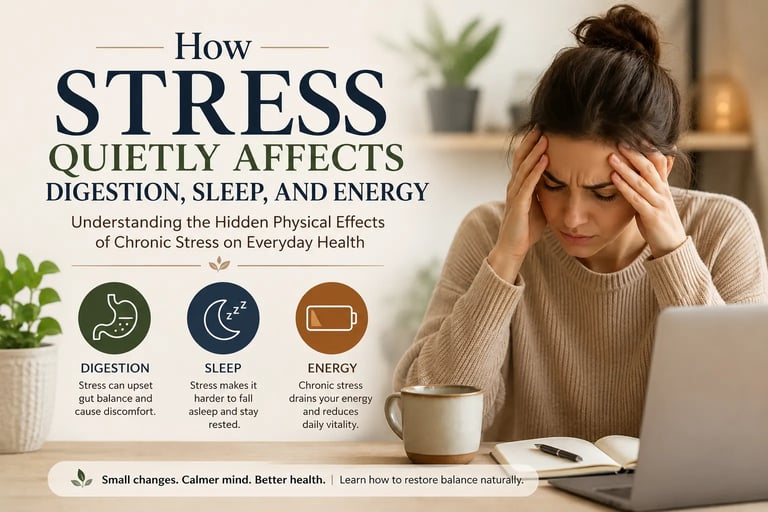
How Stress Quietly Affects Digestion, Sleep, and Energy
Learn how chronic stress affects digestion, sleep, energy levels, hormones, and overall wellbeing and discover practical ways to restore balance naturally.
HEALTH & AWARNESS
Tapas Kumar Basu
5/18/20266 min read
Stress Does Not Stay Only in the Mind
Many people think of stress as something emotional — worrying too much, feeling mentally overwhelmed, or struggling to relax. But stress rarely stays confined to the mind alone.
Over time, it quietly affects the body as well.
Digestive discomfort, poor sleep, constant fatigue, headaches, muscle tension, irritability, low motivation, brain fog, and even changes in appetite are often connected to ongoing stress levels more than people realize.
The human body is designed to handle short periods of stress. In dangerous or demanding situations, stress responses help people react quickly and stay alert. The problem begins when the body remains under pressure for long periods without proper recovery.
Modern life makes this increasingly common.
Constant notifications, financial worries, work pressure, overstimulation, irregular sleep, excessive screen exposure, lack of quietness, and emotional uncertainty can keep the nervous system in a prolonged state of tension.
Many people become so accustomed to this state that they stop recognizing stress altogether. They simply describe themselves as “always tired.”
This article explores how chronic stress quietly affects digestion, sleep, and daily energy — and why restoring balance often requires small but meaningful lifestyle changes rather than dramatic solutions.
How Stress Affects the Nervous System
When the brain perceives stress, the body activates what is commonly known as the “fight-or-flight” response.
Stress hormones such as cortisol and adrenaline increase temporarily to prepare the body for action.
In short-term situations, this response can be useful. However, when stress becomes constant, the nervous system struggles to return to a calm and balanced state.
Over time, this may affect:
Digestion
Sleep quality
Hormonal balance
Energy production
Concentration
Mood stability
Immune function
The body is remarkably resilient, but it still needs periods of recovery.
Without enough physical and mental recovery, stress slowly begins influencing everyday wellbeing in ways that may appear unrelated at first.
The Connection Between Stress and Digestion
The digestive system is especially sensitive to emotional stress.
Many people notice stomach discomfort before important meetings, examinations, interviews, or emotionally difficult situations. This happens because the brain and digestive system are deeply connected through the gut-brain axis.
When stress becomes chronic, digestion may gradually become less efficient.
Common stress-related digestive symptoms include:
Bloating
Acidity or heartburn
Irregular bowel movements
Loss of appetite
Emotional overeating
Nausea
Stomach tightness or discomfort
Stress can also influence eating habits indirectly. Some people begin skipping meals, eating too quickly, consuming excessive caffeine, or depending more heavily on processed comfort foods during stressful periods.
Over time, these patterns may affect overall digestive health and energy levels.
Many people focus only on what they eat while ignoring the emotional state in which they eat. Yet the body often digests food more comfortably when the nervous system feels calmer and less rushed.
Why Stress Often Disrupts Sleep
Sleep problems are among the most common physical effects of chronic stress.
Even when the body feels exhausted, the mind may remain restless.
Some people struggle to fall asleep. Others wake repeatedly during the night or wake up feeling mentally tired despite spending enough hours in bed.
This happens because stress keeps the nervous system in a more alert state than normal.
Common stress-related sleep difficulties include:
Racing thoughts before sleep
Light or interrupted sleep
Early morning waking
Jaw tension or muscle tightness
Feeling mentally active late at night
Difficulty feeling fully rested
Poor sleep and stress also reinforce each other. Stress disrupts sleep, and insufficient sleep often increases emotional sensitivity and stress responses the next day.
Over time, this cycle can gradually affect concentration, mood, motivation, and physical energy.
Many people believe they simply “need more sleep,” when in reality the nervous system may first need more calmness.
Why Chronic Stress Drains Daily Energy
One of the most overlooked effects of chronic stress is persistent fatigue.
People often assume low energy always comes from physical work, aging, or lack of motivation. Yet ongoing mental tension can exhaust the body quietly over time.
Stress requires constant internal alertness.
Even when a person appears physically inactive, the nervous system may remain continuously stimulated through worry, emotional pressure, multitasking, overthinking, or information overload.
This may lead to:
Brain fog
Difficulty concentrating
Low motivation
Emotional exhaustion
Irritability
Reduced physical stamina
Feeling tired without obvious reason
Some people describe this state as “running mentally all day.”
The body can tolerate short periods of pressure reasonably well. But remaining emotionally overstimulated for months or years without proper recovery gradually affects overall vitality.
The Modern Lifestyle Often Keeps the Brain Overstimulated
Human beings were not designed to process endless streams of information without pause.
Modern life constantly competes for attention:
Phone notifications
Social media scrolling
Continuous news exposure
Work-related messages
Artificial lighting late at night
Excessive multitasking
Lack of quiet mental space
Many people rarely experience true mental stillness anymore.
Even moments of rest are often filled with screens, noise, or digital stimulation.
As a result, the nervous system may remain activated for much longer than necessary.
This does not mean modern technology is harmful by itself. The problem is usually the absence of balance, boundaries, and recovery.
Stress Also Influences Hormones and Inflammation
Chronic stress may influence hormonal balance over time, particularly through long-term cortisol elevation.
While cortisol itself is not “bad,” constantly elevated stress hormones may contribute to:
Sleep disruption
Increased abdominal fat
Mood changes
Fatigue
Increased cravings for sugar or processed food
Higher inflammation levels
Research also suggests that prolonged stress may affect immune function and increase vulnerability to certain health problems when combined with poor lifestyle habits.
The body functions best when periods of activity are balanced with periods of recovery.
Small Daily Habits Often Help More Than Extreme Solutions
Many people search for dramatic ways to “eliminate stress.” In reality, stress management usually improves through small, repeatable daily habits.
Simple practices that may support nervous system recovery include:
Walking regularly
Eating meals more slowly
Reducing unnecessary screen exposure before sleep
Maintaining a consistent sleep schedule
Spending quiet time outdoors
Practicing deep breathing
Talking openly with trusted people
Taking short breaks during mentally demanding work
Limiting excessive multitasking
These habits may appear simple, but over time they often help the body feel safer, calmer, and more regulated.
The nervous system responds strongly to consistency.
Emotional Recovery Is Also Physical Recovery
Many people separate emotional health from physical health as though they are completely different things.
In reality, the body and mind continuously influence one another.
A calmer emotional state often improves:
Digestion
Sleep quality
Energy levels
Concentration
Muscle tension
Appetite regulation
This is one reason emotionally supportive environments matter so much.
Simple things such as meaningful conversations, quiet routines, laughter, emotional safety, and moments of calm can influence physical wellbeing more than people sometimes realize.
Avoid Treating Constant Stress as “Normal”
Modern society often treats exhaustion as ordinary.
People say:
“Everyone is stressed.”
“Being tired is normal.”
“That’s just modern life.”
But remaining constantly overwhelmed should not become the accepted definition of healthy living.
The body gives warning signs gradually:
Poor sleep
Digestive discomfort
Irritability
Constant fatigue
Difficulty relaxing
Emotional numbness
Ignoring these signals for too long often makes recovery harder later.
Stress may be unavoidable at times, but chronic overload should not become a permanent lifestyle.
Key Takeaways
Chronic stress affects both the mind and body.
Stress commonly disrupts digestion, sleep, and daily energy.
The nervous system requires regular periods of recovery.
Poor sleep and stress often reinforce each other.
Modern overstimulation can quietly increase mental fatigue.
Small daily habits usually support stress recovery more effectively than extreme solutions.
Emotional wellbeing and physical health are deeply connected.
A Practical Closing Perspective
Stress is not always loud or dramatic. Often it builds quietly through constant pressure, overstimulation, emotional tension, and lack of recovery.
Many people continue functioning normally while their body slowly becomes more exhausted underneath.
The good news is that recovery also begins quietly.
A calmer evening routine.
A slower meal.
A short walk.
Better sleep habits.
Less overstimulation.
More moments of genuine rest.
These small changes may seem ordinary, but over time they can help the body and mind feel steadier, clearer, and more balanced again.
Good health is not built only through nutrition or exercise. Sometimes it also begins with learning how to live without remaining in a constant state of tension.
Frequently Asked Questions (FAQ)
1. Can stress really affect digestion?
Yes. Chronic stress may affect digestion through the gut-brain connection, potentially contributing to bloating, acidity, appetite changes, and irregular bowel movements.
2. Why does stress make it difficult to sleep?
Stress keeps the nervous system in a more alert state, which can make it harder for the body and mind to relax before sleep.
3. Can stress cause constant tiredness?
Yes. Ongoing emotional tension and mental overstimulation may gradually drain physical and mental energy over time.
4. What are common physical signs of stress?
Common signs include headaches, muscle tension, digestive discomfort, poor sleep, fatigue, irritability, and difficulty concentrating.
5. Does stress affect appetite?
Yes. Some people lose appetite during stress, while others experience emotional overeating or stronger cravings for sugar and processed foods.
6. How does screen time contribute to stress?
Excessive screen exposure, especially late at night, may overstimulate the brain, disrupt sleep quality, and increase mental fatigue.
7. Can walking help reduce stress?
Regular walking may help calm the nervous system, improve circulation, support emotional balance, and reduce mental overstimulation.
8. Why do some people feel mentally tired even without physical work?
Mental overload, constant decision-making, emotional pressure, and information overstimulation can exhaust the brain even without heavy physical activity.
9. How long does stress recovery usually take?
Recovery varies from person to person depending on lifestyle, sleep, emotional support, and stress levels. Small consistent habits usually help more than quick fixes.
10. What is one of the most effective ways to reduce daily stress?
Creating regular periods of calmness, sleep, movement, and reduced overstimulation often helps the nervous system recover gradually over time.
Scientific and Health References (Selected)
American Psychological Association (APA) – Stress and Health
Mayo Clinic – Chronic Stress Symptoms and Effects
Harvard Medical School – Understanding the Stress Response
National Institute of Mental Health (NIMH) – Coping With Stress
Cleveland Clinic – Stress and Digestive Health
Sleep Foundation – Stress and Sleep Relationship
National Institutes of Health (NIH) – Stress Physiology Research
World Health Organization (WHO) – Mental Health and Wellbeing
Johns Hopkins Medicine – Stress and the Body
Frontiers in Psychology – Chronic Stress and Health Outcomes
Disclaimer: This article is intended for educational purposes only and should not replace professional medical or mental health advice. Persistent physical or emotional symptoms should be discussed with a qualified healthcare professional.
Explore fitness, meditation, and healthy living tips.
© 2026. All rights reserved.